Cartius: The Font That Channels Ancient Norse Elegance
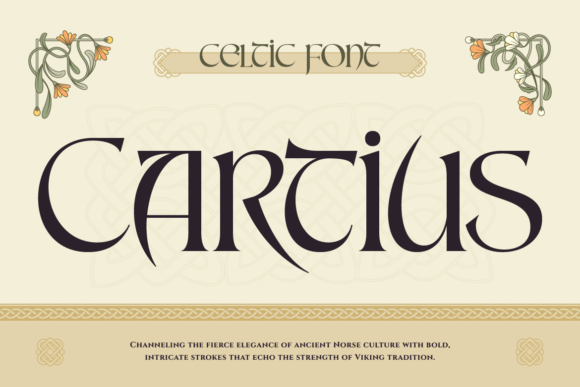
There's a moment in every creative project when you realize the typeface you've chosen doesn't just display words—it tells a story. Cartius does exactly that, drawing from the fierce elegance of ancient Norse culture with bold, intricate strokes that echo the strength of Viking tradition. If you've ever wanted your typography to carry the weight of history while still feeling fresh and usable in modern design, this typeface deserves your attention.
Inspired by ancient manuscripts, sacred texts, and traditional Celtic art, Cartius emerged from a design tradition that took shape around the 6th to 7th centuries across Ireland, Scotland, and Britain. That heritage isn't just decoration—it's baked into every letterform. The result is a font that feels simultaneously timeless and distinctive, giving your text an instantly rich legacy rooted in Celtic culture and a style that's both recognizable and captivating.
What Makes Cartius Visually Striking
Cartius isn't your everyday serif font. It carries a display font personality that commands attention without sacrificing legibility. The letterforms feature bold strokes with intricate detailing—think of the kind of craftsmanship you'd see carved into ancient stone or illuminated in medieval manuscripts. There's a certain weight and presence to each character that makes headlines pop and titles feel important.
What sets this typeface apart from other creative fonts is its ability to balance ornamental richness with practical usability. Some decorative typefaces look gorgeous in a logo mockup but fall apart when you try to use them at smaller sizes or in body text. Cartius avoids that trap. The designers clearly thought about real-world application, not just visual appeal.
The font's visual characteristics include strong vertical strokes, subtle serifs with a handcrafted feel, and decorative elements that reference Celtic knotwork without becoming illegible. It's the kind of typography that makes people pause and look closer—which is exactly what you want when building a brand identity or designing editorial layouts.
Where Cartius Shines in Real Projects
Let's talk about actual applications, because a font is only as good as the projects you can use it for. Cartius works beautifully across a surprisingly wide range of creative contexts.
Branding and Logo Design: If you're building a brand that wants to convey strength, heritage, or artisanal quality, Cartius gives you an immediate visual vocabulary. Think craft breweries, outdoor adventure companies, heritage food brands, or boutique clothing lines. The font communicates authenticity without you having to say a word. Pair it with a clean sans serif font for body copy, and you've got a brand identity that feels both grounded and distinctive.
Packaging Design: Product packaging needs to grab attention on a crowded shelf. Cartius delivers that instant visual hook, especially for products in the food, beverage, wellness, or artisanal goods space. Imagine it on a whiskey label, a handcrafted soap wrapper, or a specialty tea box—the historical elegance does half the marketing work for you.
Social Media Graphics: Standing out in a scroll-heavy environment requires typography that stops thumbs. Cartius works exceptionally well for quote graphics, announcement posts, and branded content where you want a premium, editorial feel. It photographs well and maintains its character across different screen sizes, which matters when your audience is viewing content on everything from phones to desktop monitors.
Website Headers and Blogs: For web design, Cartius excels in hero sections, blog post titles, and landing page headlines. It gives digital spaces a sense of depth and intention that generic web fonts simply can't match. Just be mindful of loading times with display fonts—optimize your font files and consider using it selectively for high-impact elements rather than every paragraph of body text.
Print Materials and Posters: This is where Cartius truly comes alive. Printed at scale on posters, flyers, or editorial layouts, the intricate details of each letterform become fully visible. Event posters, book covers, magazine headers, and promotional materials all benefit from the font's commanding presence.
Invitations and Merchandise: Wedding invitations, event announcements, and merchandise design—think t-shirts, mugs, and tote bags—gain an artisanal quality with Cartius. The medieval design sensibility pairs naturally with products that aim for a handcrafted or heritage aesthetic.
Digital Products and Marketing Assets: E-book covers, online course graphics, email headers, and digital ads all benefit from a typeface that signals quality and intentionality. Cartius helps your digital products look as premium as they are.
Pairing Cartius With Other Typefaces
No font works in isolation. The real magic happens when you pair Cartius with complementary typefaces that let it do what it does best—command attention at display sizes—while other fonts handle supporting roles.
A clean sans serif font makes an excellent partner for body text. Think of fonts like Open Sans, Lato, or Montserrat. Their simplicity creates a visual breathing room that lets Cartius headlines stand out without competing for attention. This contrast is fundamental to good typography: one font leads, the other supports.
For projects that need a softer touch in secondary elements, a script font or handwritten font can add warmth alongside Cartius's strength. Use the script font sparingly—perhaps for accent text, pull quotes, or call-to-action phrases—while Cartius handles the primary headlines.
The key to successful font pairing is testing. Don't just eyeball it on your design software. Export samples, print them out if possible, view them on different devices, and ask someone else what they see. Readability should always win over aesthetics. If people can't comfortably read your text, the design isn't working—no matter how beautiful the font looks in isolation.
Practical Tips for Using Cartius Effectively
Before you commit to Cartius for a project, keep a few practical considerations in mind.
Review the included font styles. Many premium fonts come with multiple weights, alternates, or stylistic sets. Explore what's included before you start designing—you might discover alternate characters that fit your project even better than the defaults.
Consider your audience. Cartius resonates strongly with audiences who appreciate heritage, craftsmanship, and historical aesthetics. If your target demographic skews toward outdoor enthusiasts, history buffs, fantasy fans, or artisanal product lovers, the font will feel like a natural fit. For a tech startup targeting Silicon Valley investors, you might want something different.
Check commercial licensing. If you're using Cartius for client work, merchandise, or any commercial application, verify the license terms. Most premium font licenses cover standard commercial use, but some have restrictions on merchandise production or embedding in digital products. Understanding these terms upfront saves headaches later.
Test at multiple sizes. Display fonts like Cartius are designed to look their best at larger sizes. Test how it reads at the smallest size you plan to use it. If legibility drops off, either increase the size or switch to a more neutral typeface for that particular application.
Don't overuse it. The power of a distinctive typeface like Cartius comes from strategic restraint. Use it for headlines, titles, and key brand elements. If you set an entire website or brochure in Cartius, the visual impact diminishes and readability suffers. Let it be the accent, not the entire room.
Bringing Historical Elegance Into Modern Design
Design trends come and go, but typography rooted in historical craftsmanship has a staying power that trendy fonts rarely achieve. Cartius bridges the gap between ancient artistry and modern design needs. It gives you a typeface that carries centuries of visual tradition into contemporary projects—whether you're designing a brand identity for a new business, creating social media content that needs to stand out, or building packaging that tells a story before the customer even reads the label.
The Celtic and Norse design heritage behind Cartius isn't just aesthetic decoration. It's a visual language that communicates strength, authenticity, and timelessness. When you choose this font for a project, you're making a deliberate decision to infuse your design with those qualities. And in a landscape full of interchangeable sans serifs and overused script fonts, that deliberate choice is what separates memorable design from forgettable noise.
Take time to experiment. Try Cartius in unexpected contexts. Pair it with modern design assets and see what happens. The best typography choices often come from designers willing to explore beyond their comfort zone—and this typeface rewards that exploration with results that genuinely stand apart.