Unleashing Raw Texture: The Power of Rubber Grunge
There is a distinct moment in a design project where everything looks "correct"—the alignment is perfect, the colors are harmonious, and the layout flows—but it still feels a little too sterile. It lacks a pulse. If you have ever stared at a polished vector logo or a clean social media graphic and felt it was missing a bit of soul, you are likely yearning for something tactile. In a digital landscape dominated by pixel-perfect vectors and pristine sans-serifs, there is a growing hunger for designs that feel human, weathered, and real. This is exactly where the Rubber Grunge typeface steps in, bridging the gap between digital precision and analog authenticity.
The Aesthetic of Authenticity
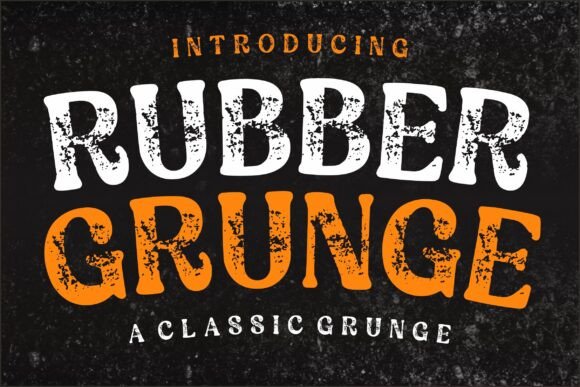
At its core, Rubber Grunge is a powerful display typeface that draws deep inspiration from vintage lettering and the classic aesthetics of the grunge movement. However, unlike chaotic or unreadable distressed fonts, this typeface balances its rough edges with bold, structured curves. It is designed to mimic the look of a heavy stamp pressed firmly onto textured paper or a screen print that has been washed just enough to show its age. The distressed textures are not random; they are curated to provide an authentic retro feel that suggests a story behind the text.
For designers, the appeal lies in the "handcrafted" illusion. In an era where consumers crave bespoke products and artisanal branding, a font that looks machine-perfect can sometimes be a detriment. Rubber Grunge offers that rugged, artistic touch that implies a product was made by hand, not just generated by code. The characters are eye-catching and substantial, ensuring that they do not just sit on the canvas but rather command attention.
Practical Applications: Beyond the Poster
While a display font like this is an obvious choice for music posters or horror movie titles, its utility extends far beyond niche genres. The versatility of Rubber Grunge lies in its ability to adapt to various creative constraints while maintaining its distinct personality.
Consider the world of branding and logo design. For a small business—perhaps a craft brewery, a barbershop, a skateboard brand, or a specialty coffee roaster—the brand identity needs to communicate heritage and quality immediately. Using Rubber Grunge as a primary wordmark can instantly establish a "western-inspired" or "vintage industrial" vibe without needing complex illustrations. It serves as a visual shortcut to a specific emotional response.
Furthermore, in packaging design, shelf appeal is everything. A consumer scanning a crowded aisle makes split-second decisions. The textured details of a grunge font can add a tactile quality to a label, making the product feel premium and distinct. Whether it is slapped across a black coffee bag or embossed on a leather goods box, the typeface adds weight and substance to the physical object.
Digital Dominance and Social Media
It might seem counterintuitive to use a distressed, vintage font for modern digital platforms, but Rubber Grunge shines on screens. On social media platforms like Instagram, TikTok, or Pinterest, the scroll-stopping power of an image is paramount. Clean, corporate fonts often blend into the background noise of a feed. A bold, grunge-style typeface, however, creates a strong visual impact that disrupts the pattern.
This font is perfect for social media graphics, particularly for creating quote posts, announcement banners, or story highlights. It pairs exceptionally well with modern photography. If you are a content creator posting high-contrast street photography or travel vlogs, overlaying text with Rubber Grunge adds a layer of editorial style that feels curated and professional.
For web design, this typeface should be used strategically. It is rarely a good idea to set an entire website paragraph in a display grunge font; readability would suffer, and load times might increase. Instead, it is best utilized for hero section headers, call-to-action buttons, or section titles. It draws the eye down the page, encouraging the visitor to keep reading. When used for digital products, such as downloadable planners or e-book covers, it elevates the perceived value of the asset, making it look like a premium design offering rather than a generic template.
Strategic Typography: Pairing and Hierarchy
One of the most common mistakes creatives make with display fonts is isolation. Rubber Grunge is a strong personality; it needs a partner to balance it out. This is where the art of font pairing comes into play.
Because Rubber Grunge is a serif-style display font with high texture, it pairs best with clean, geometric sans-serif fonts (like Montserrat, Helvetica, or Open Sans) for body text. The contrast between the rugged, textured headers and the clean, modern body copy creates a sophisticated visual hierarchy. This ensures that while the headers grab attention, the body text remains highly readable.
When integrating this typeface into editorial design or magazine layouts, think about "pull quotes." A distressed font is perfect for highlighting a key phrase in an article. It breaks up the monotony of standard text columns and adds visual interest. Similarly, for merchandise like t-shirts, hoodies, or tote bags, the font stands alone beautifully. It doesn't need a logo mark; the typography itself becomes the graphic.
Commercial Considerations and Licensing
For the entrepreneur or small business owner, the aesthetic appeal of a font is only half the equation. The practical side of licensing is crucial. When looking for a premium font like Rubber Grunge, you must ensure that the license covers your intended use.
Most professional display fonts come with specific tiers. A "desktop" license usually covers print materials, logos, and physical products like packaging and merchandise. However, if you plan to use the font on a website using @font-face technology, you often need a specific "webfont" license. If you are developing an app, an "app license" is required.
Always review the End User License Agreement (EULA) before purchasing. Does the license allow for unlimited prints? Can you use it on products for sale? Since Rubber Grunge is intended for commercial projects—from signage to album covers—verifying that the license supports commercial distribution is a non-negotiable step in your workflow. This due diligence protects your business legally and ensures you are respecting the work of the type designer.
Maximizing Impact: Practical Design Tips
To get the most out of Rubber Grunge, consider these practical implementation tips:
- Scale Matters: Grunge textures often disappear at very small sizes. Use this font for headlines, sub-headers, and large-scale graphics. Avoid using it for footnotes or fine print, as the distressed edges may become muddy or illegible.
- Color Contrast: High contrast works best. White text on a dark background makes the "rubber" texture pop, simulating a stamp effect. Conversely, dark text on a textured paper background enhances the vintage feel.
- Spacing (Kerning): Because display fonts have unique shapes, automatic kerning isn't always perfect. Take the time to manually adjust the letter spacing (tracking) to ensure the letters don't collide awkwardly, especially with capital letters which are common in grunge styles.
- Context is Key: Match the font to the mood of your imagery. If you are designing a wedding invitation for a rustic barn wedding, this font fits perfectly. If you are designing a flyer for a pediatric dentist, it might send the wrong signal. Understand the psychological association of the "grunge" style—it implies rebellion, authenticity, history, and rawness.
The Human Element in a Digital World
Ultimately, the enduring appeal of a typeface like Rubber Grunge is its ability to inject a human element into our designs. We live in a time of high-definition screens and vector scalability, where everything is infinitely sharp. By introducing intentional imperfection—distressed textures, ink bleed effects, and rough edges—we remind the viewer that there is a creator behind the curtain.
Whether you are revamping a brand identity, launching a new line of merchandise, or simply looking for a way to make your social media graphics stand out, embracing the rugged charm of vintage-inspired typography is a proven strategy. Rubber Grunge is not just a collection of letters; it is a tool for storytelling. It allows you to communicate resilience, creativity, and boldness before the viewer has even read a single word. By choosing the right assets and applying them with intention, you transform your projects from simple layouts into compelling visual narratives.