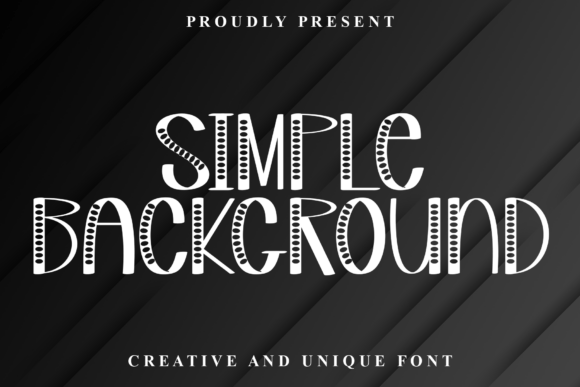
Donny: A Display Typeface for Bold Visual Statements
There's a moment in every creative project where you need typography that doesn't just sit quietly on the page but commands the entire room. You know the feeling—when a headline needs to land with impact, when a logo demands instant recognition, or when packaging has to leap off a crowded shelf. That's precisely the territory where Donny operates. This isn't a font that whispers; it's one that speaks with confidence and artistic flair, built specifically for moments where ordinary letterforms simply won't cut it.
What makes Donny stand out immediately is its strong visual personality. Every uppercase letter carries unique artistic elements that give the typeface a distinctive character. Think of it as the typographic equivalent of a signature piece of jewelry or a bold accent wall in an otherwise neutral room. It draws the eye, creates interest, and establishes a mood that's hard to ignore. For designers and creators who find themselves gravitating toward the same safe, neutral fonts project after project, Donny offers a genuine departure—a chance to inject real visual energy into work without sacrificing professionalism.
Where Bold Typography Makes the Biggest Difference
Let's talk about practical applications, because a beautiful font only matters if it actually works in real-world scenarios. Donny shines brightest in contexts where you're working with short, high-impact text. Brand names, taglines, hero headlines on websites, social media post titles, event invitations, poster headers, product names on packaging—these are the moments where this typeface does its best work.
Consider a small-batch candle company trying to differentiate itself in a saturated market. The brand name set in Donny on a minimalist label immediately communicates artistry and intentionality. Or imagine a podcast cover art where the show title needs to be legible at thumbnail size while still conveying a specific creative tone. A display font like this handles that challenge beautifully because its letterforms are designed to be visually interesting even at smaller scales where decorative serif fonts or script fonts might become muddy.
Here's a practical breakdown of projects where Donny fits naturally:
- Logo design for creative businesses, studios, and personal brands
- Packaging design for artisan products, cosmetics, food brands, and specialty goods
- Social media graphics including Instagram stories, Pinterest pins, and YouTube thumbnails
- Website hero sections where a bold headline sets the tone for an entire page
- Print materials such as business cards, brochures, and promotional flyers
- Merchandise like t-shirts, tote bags, and stickers
- Event invitations and announcement cards
- Editorial layouts for magazine covers, feature spreads, and book titles
- Digital products including ebook covers, course graphics, and worksheet headers
- Marketing assets such as banner ads, email headers, and sales page headlines
Understanding the All-Caps Design Decision
One important thing to understand before working with Donny is that it's an all-caps display typeface. This means it includes uppercase letters only—no lowercase. If you're used to typing in mixed case, this requires a slight adjustment in how you approach your text, but it's actually a deliberate and intelligent design choice.
All-caps display fonts exist because uppercase letters, when designed with care and artistic intent, create a uniform visual rhythm that mixed-case typography simply can't replicate. Every letter occupies a similar height and visual weight, producing a clean, powerful block of text that reads as a cohesive graphic element rather than a string of individual characters. This is why you see all-caps treatments used so frequently on movie posters, album covers, magazine mastheads, and luxury brand identities.
The key is knowing when this approach serves your project and when it doesn't. Donny is perfect for headlines, logos, and decorative initials—situations where you're working with a handful of words that need maximum visual impact. It's not designed for body copy, long paragraphs, or extended reading. Pairing it with a clean sans serif font or a readable serif font for supporting text is the smart move. A combination like Donny for headlines with a font like Open Sans, Lora, or even a simple geometric sans serif for body text creates a balanced typographic hierarchy that feels both dynamic and professional.
Strengthening Brand Identity Through Intentional Typography
Typography is one of the most underrated tools in brand building. Most people think about logos and color palettes first, but the fonts you choose communicate just as much about your brand's personality as any visual element. A playful handwritten font says something entirely different than a sharp geometric sans serif. Donny communicates creativity, boldness, and a willingness to stand out—qualities that resonate with audiences who value originality.
For small business owners and entrepreneurs, investing in a premium font like this can be a genuine competitive advantage. When your brand typography looks distinctive and intentional, it signals professionalism and care. Customers notice these things, even if they can't articulate exactly what makes one brand feel more polished than another. Consistent use of a unique display typeface across your website, packaging, social media, and print materials builds recognition over time. People start associating that visual style with your business before they even read the words.
This is especially true in crowded digital spaces. On platforms like Instagram and Pinterest, where users scroll quickly past hundreds of images daily, typography that catches the eye in a fraction of a second can be the difference between a pause and a scroll. Donny's distinctive letterforms give you that edge without requiring elaborate graphic design or complex layouts.
Practical Tips for Working with Display Typefaces
If you're newer to working with decorative or display fonts, a few practical guidelines will help you get the most out of Donny or any similar typeface.
First, test your font pairings before committing. Set your headline in Donny and try it alongside several different body text options. Look for contrast—a bold, artistic display font works best when the supporting text is simpler and more restrained. Too many decorative elements competing for attention creates visual noise rather than a clear hierarchy.
Second, pay attention to spacing and sizing. Display fonts often benefit from generous letter-spacing, especially in all-caps settings. Give the letters room to breathe. Cramping a bold typeface into a tight space undermines its visual impact. Similarly, make sure your headline text is large enough that the artistic details of each letter are clearly visible. If the font's personality gets lost at small sizes, it's not serving its purpose.
Third, consider the context of use. A font that looks spectacular on a poster viewed from three feet away might feel overwhelming on a mobile screen. Think about where your audience will encounter your design and adjust accordingly. For web design, test how the typeface renders across different devices and browsers. For print, do a physical proof before committing to a large run.
Finally, the included file formats deserve a mention. Donny comes with both OTF and TTF files, which covers virtually every design application you'll encounter. The OTF format works seamlessly with professional design software like Adobe Illustrator, Photoshop, and InDesign, while the TTF format ensures compatibility across a broader range of applications and operating systems. Having both means you won't run into technical roadblocks regardless of your workflow.
Making Typography Work for Your Creative Vision
The best typography decisions happen when you start with your project's goals rather than personal preferences. Ask yourself what you want your audience to feel when they encounter your design. Should they feel energized? Intrusted? Reassured? Playful? Sophisticated? The answers to these questions guide you toward the right typeface naturally.
Donny answers the call when your goal is to create something that feels artistically bold and visually memorable. It's a tool in your design toolkit—not a universal solution, but an exceptionally effective one for the right situations. Whether you're designing a brand identity from scratch, refreshing your social media presence, creating packaging for a new product line, or putting together marketing materials for an upcoming launch, having a distinctive display font in your collection gives you creative options that generic fonts simply can't provide.
The commercial licensing that comes with fonts like these also means you can use your designs confidently across client work, merchandise, and digital products without worrying about usage restrictions. That peace of mind matters when you're building a business or creative practice around your design work.
Typography shapes perception in ways that are both subtle and profound. Choosing fonts with intention—matching their personality to your project's voice, pairing them thoughtfully with complementary typefaces, and deploying them in contexts where they'll have the greatest impact—is one of the most effective ways to elevate your visual communication. Donny gives you a powerful option for those moments when ordinary just isn't enough.