Clear, Guided Handwriting with Arrows Lined Letter Tracing
There’s something deeply satisfying about watching a child’s hand confidently form a letter, their pencil following a clear path from start to finish. For educators, therapists, and parents, that moment of clarity is the goal. The right tools don’t just teach—they guide. That’s precisely the philosophy behind a thoughtfully designed resource like the Arrows Lined Letter Tracing font set. It’s more than a collection of letters; it’s a scaffold for developing fine motor skills and building foundational writing confidence, one stroke at a time.
A Visual Guide for Foundational Skills
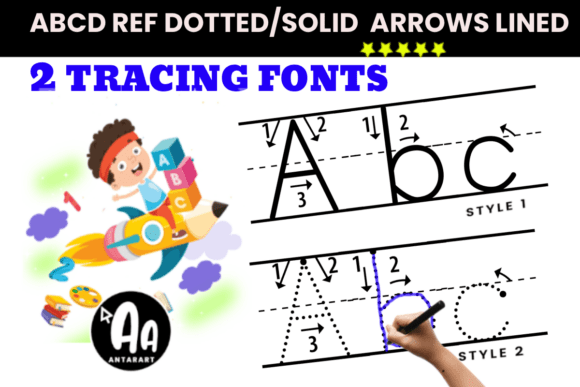
At its core, this tracing font system is built on clarity. Each character in the set features directional arrows and a baseline, providing an unambiguous roadmap for letter formation. This visual cue is critical for young learners, ESL students, or anyone developing handwriting proficiency. It answers the silent questions: Where do I start? Which way does my pencil go? How high should this part be? The inclusion of both solid and dotted letter styles allows for progressive practice, from tracing over a complete guide to forming the letter independently alongside a model. The style is rooted in traditional school handwriting, making it a familiar and trusted format for educators.
From Classroom Worksheets to Creative Projects
While its primary audience is clear, the practical applications of a well-structured tracing font extend far beyond a single worksheet. For a teacher, this font bundle is a powerhouse for creating custom materials. Imagine generating hundreds of unique practice pages, spelling lists, or name-writing activities without ever hitting a creative wall. It’s perfect for designing fine motor center activities, digital interactive pages, or personalized take-home packs for students who need extra support.
But let’s think creatively. The clean, instructional aesthetic of a lined, directional font has a unique charm. Consider these applications for designers, content creators, and small business owners:
- Educational Branding & Packaging: A tutoring service, children’s bookstore, or educational app could use this font style in their logo or on product packaging to instantly communicate a focus on learning and skill-building.
- Blog & Website Graphics: Create engaging featured images, infographics, or section headers for blogs about parenting, homeschooling, or child development. The font visually reinforces the topic.
- Social Media Content: Design scroll-stopping posts for platforms like Instagram or Pinterest. Use the dotted letter style to create “fill-in-the-blank” engagement graphics or the solid style for clear, instructional tips.
- Digital Products & Merchandise: The font is ideal for creating printable posters for a classroom or playroom, decorative alphabet cards, or even designs for t-shirts and mugs sold on print-on-demand sites targeting the education market.
- Invitations & Party Supplies: For a child’s birthday with a “school” or “learning” theme, the font can be used to create cohesive invitations, banners, and thank-you cards.
Building Confidence Through Consistency
One of the most significant advantages of using a dedicated font set like this is the visual consistency it brings to a project or a learning environment. When every worksheet, flashcard, and digital slide uses the same clear, guided letterforms, it reduces cognitive load for the learner. They aren’t deciphering a new style each time; they are reinforcing the same muscle memory and visual recognition. This consistency builds proficiency and, ultimately, confidence. For a brand, this translates to a professional and cohesive presentation across all materials, strengthening recognition and trust with the audience.
Choosing and Using Your Font Effectively
Integrating a specialty font into your workflow is straightforward with a bit of planning. First, review the font styles included in the bundle. You’ll likely have multiple weights or variations—perhaps a standard solid, a dotted guide, and a lined version. Choose the style that best matches your project’s immediate goal: use the dotted version for active practice pages, the lined version for display posters, and the solid version for answer keys or decorative elements.
When pairing this font with others, opt for simplicity. Since the tracing font is highly detailed, pair it with a clean, neutral sans-serif font for body text or instructions. This creates a clear hierarchy without visual competition. Always test your designs at the size they will be viewed. A worksheet for small hands needs larger, clearer letters than a social media graphic viewed on a phone.
Finally, a crucial note on licensing. If you plan to use the font in projects you sell—whether that’s a digital download on Teachers Pay Teachers, a printed poster on Etsy, or client work—ensure you have the appropriate commercial license. Reputable font designers are clear about their terms, and respecting them supports the creative ecosystem that produces these valuable tools.
The true value of a resource like the Arrows Lined Letter Tracing font lies in its ability to bridge the gap between instruction and creation. It empowers educators to produce tailored materials efficiently and offers designers a unique aesthetic to communicate themes of learning, guidance, and growth. It’s a practical asset that, when used thoughtfully, helps lay a clear and confident foundation—both on the page and in the minds of those learning to write.