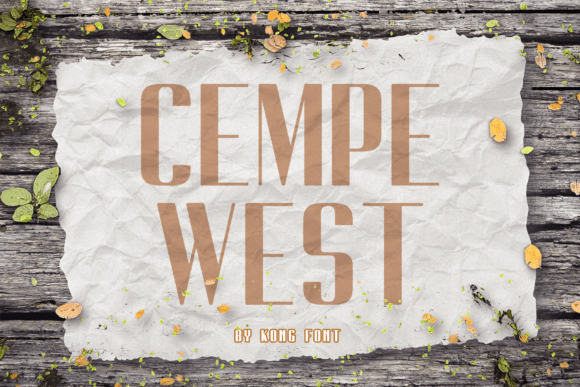
Cempe West: A Handwritten Font with Modern Playful Energy
There's a particular challenge in design work where you need something to feel personal and approachable without sacrificing professionalism. Too often, handwritten fonts lean too far into one direction—they're either overly casual and hard to read, or they're so polished they lose their authentic charm. Finding that middle ground where warmth meets usability is surprisingly rare, and that's exactly where Cempe West positions itself.
Created by Kong Font Studio and available through Creative Fabrica, Cempe West is a modern handwritten font that balances playful character with practical design application. It's the kind of typeface that doesn't try to be everything to everyone, but for the right project, it hits a sweet spot that's hard to replicate with standard serif or sans serif options.
What Makes This Font Work Visually
The first thing you notice about Cempe West is its natural flow. The letterforms have an organic, hand-drawn quality that feels genuinely crafted rather than digitally filtered. Each character carries subtle variations in stroke weight and angle that mimic the imperfections of actual handwriting, but the overall consistency is high enough that it remains legible at various sizes.
Unlike some script fonts that connect letters in elaborate loops and swirls, Cempe West takes a more restrained approach. The connections between letters feel intentional rather than decorative, which means the font maintains readability even when used in longer phrases or sentences. This is a practical consideration that matters more than most people realize—especially when you're working on projects where text needs to be understood quickly, like packaging labels or social media graphics.
The letter spacing is well-calibrated for a handwritten style. It doesn't feel cramped or overly loose, which is a common issue with premium font options in this category. That balanced spacing contributes to the font's versatility across different applications and sizes.
Where Cempe West Finds Its Place in Real Projects
Think about the brands you encounter daily that want to communicate friendliness and authenticity. Coffee shops, boutique bakeries, handmade goods sellers, lifestyle bloggers, wellness brands—these are spaces where a handwritten font can do meaningful work. Cempe West fits naturally into these contexts because it carries personality without becoming a distraction.
For logo design, the font works particularly well for businesses that want to emphasize a personal touch. A yoga studio, a children's clothing brand, or a local florist could use this typeface as part of their visual identity and immediately communicate approachability. The key is pairing it thoughtfully—more on that shortly.
In packaging design, handwritten fonts serve a specific function. They signal that a product is artisanal, small-batch, or made with care. Cempe West's clean legibility makes it suitable for product names, taglines, or descriptive text on labels where you want that handcrafted feel without sacrificing clarity on a shelf.
Social media content is another strong application. Instagram posts, Pinterest graphics, and story templates often benefit from typography that feels human and relatable. When you're competing for attention in a feed full of polished corporate content, a font like Cempe West can help your posts feel more personal and stop-worthy.
For editorial design and blog headers, the font adds visual interest to headlines and pull quotes without overwhelming the reading experience. It's not designed for body text—that's where a clean sans serif font should take over—but as an accent typeface, it brings energy and warmth to page layouts.
Practical Applications Beyond Digital
Print materials deserve attention here too. Wedding invitations, event flyers, greeting cards, and thank-you notes all benefit from handwritten typography. Cempe West's modern style avoids the overly formal feel of traditional calligraphy fonts while still maintaining enough elegance for celebratory occasions.
For entrepreneurs creating merchandise—think tote bags, mugs, t-shirts, or stickers—a font like this can become a recognizable element of your product line. The playfulness translates well to physical goods, and the font's clean construction means it reproduces clearly across different printing methods.
Digital products are another consideration. If you're selling planners, worksheets, or template packs, incorporating a handwritten font for headers or accent text can elevate the perceived value of your offerings. It adds that curated, designed quality that customers look for when purchasing digital downloads.
Making Smart Decisions About Font Pairing
Here's where practical design knowledge matters. A handwritten font like Cempe West shouldn't carry the entire weight of your typography system. It needs a partner—a complementary typeface that handles the heavy lifting of body text, captions, and functional information.
A clean sans serif font is typically the safest pairing choice. Something like Montserrat, Open Sans, or Poppins provides a neutral counterbalance that lets the handwritten style stand out without creating visual chaos. The contrast between the organic, playful script and the structured, geometric sans serif creates a dynamic but harmonious relationship.
If your brand leans more sophisticated, a light serif font can also work as a companion. The key is ensuring enough contrast between the two typefaces so they don't compete. Cempe West should be the star of your headlines and accent text, while the supporting font quietly handles everything else.
Before committing to any font for a project, test it at the actual sizes you'll use. A font that looks beautiful at 72 points on your screen might lose its charm at 14 points on a business card. Print samples, view them at arm's length, and ask someone unfamiliar with the project if they can read the text easily. That simple test reveals more than hours of screen-based evaluation.
Licensing and Compatibility Considerations
One practical detail worth addressing: commercial licensing. If you're using Cempe West for client work, merchandise, or products you intend to sell, verify that your license covers those uses. Fonts available through Creative Fabrica typically come with commercial licensing options, but the specific terms matter. Read the license agreement before finalizing any project, especially if you're creating products for resale or distributing digital files that include the font.
The font's compatibility with popular design tools is another practical advantage. Whether you work in Photoshop, Silhouette Design Studio, Illustrator, or other standard software, Cempe West integrates into existing workflows without technical headaches. For crafters who use cutting machines and design software like Silhouette Studio, this compatibility removes friction from the creative process.
Building Brand Recognition Through Thoughtful Typography
Typography choices accumulate over time. When you consistently use the same font across your website headers, social media posts, packaging, and marketing materials, audiences begin to associate that visual style with your brand. It becomes part of your identity—recognizable even before someone reads the actual words.
Cempe West offers that opportunity for brands that want to be perceived as creative, approachable, and genuine. It's not trying to be a universal workhorse like Helvetica or a trendy statement piece like some display fonts. It occupies a specific, useful space in the typography landscape—one where personality and professionalism coexist.
The font won't solve every design challenge, and it shouldn't. But for the projects where warmth, creativity, and human connection matter, it's a solid choice worth exploring. Sometimes the right typeface isn't the most famous one or the most expensive one—it's the one that quietly does its job and makes everything around it feel a little more intentional.