Bubblu: The Playful Display Font That Pops Off the Page
Every brand and every creative project needs a voice. While words carry the message, the typography you choose often delivers the emotion. For designers, entrepreneurs, and content creators aiming for a vibe that is energetic, youthful, and undeniably fun, there is a specific visual language that resonates instantly. It is the aesthetic of rounded corners, bold weight, and soft curves—a style that feels approachable and modern. Finding a typeface that captures this specific "chunky" energy without sacrificing readability can be a challenge. This is where Bubblu enters the conversation, offering a distinct visual personality that bridges the gap between playful branding and professional design assets.
Visual Characteristics: The Power of Soft, Bold Shapes
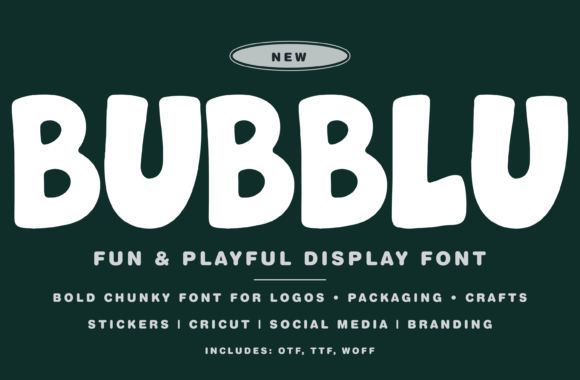
Bubblu is classified as a display typeface, meaning it is designed specifically for impact at larger sizes. Unlike a traditional serif font or a clean sans serif font used for body text, a display font serves as the visual hook. What makes this particular font stand out in a crowded market of creative fonts is its construction. The letterforms are intentionally inflated, mimicking the aesthetic of bubble lettering but with a modern, digital polish. The strokes are thick and uniform, creating high-contrast shapes that command attention on both screens and physical products.
The visual appeal lies in the "softness" of the geometry. Sharp edges are minimized in favor of rounded terminals, giving the text a tactile, almost edible quality—think glossy icing on a donut or inflated vinyl stickers. This design choice creates an immediate psychological association with friendliness and approachability. For a brand, this is crucial. If you are launching a product line for children, pets, or lifestyle goods, the typography needs to signal safety and joy. Bubblu achieves this through its generous x-height and open counters, ensuring that even at its boldest, the text remains legible and airy rather than clunky.
Practical Applications: From Screen to Physical Product
The versatility of a font like Bubblu is best understood by looking at how it performs across different mediums. In the digital realm, attention spans are short. A thumbnail for a YouTube video or a header image on an Instagram feed has only a fraction of a second to make an impression. The thick, rounded structure of this typeface cuts through the visual noise of a busy social feed. It is particularly effective for "kawaii" or aesthetic design trends, where the goal is to create a mood that is visually pleasing and emotionally uplifting. When used for web design headers or blog titles, it breaks the monotony of standard web-safe fonts, instantly elevating the perceived value of the content.
However, the true test of a display font often lies in print and physical applications. This is where Bubblu shines for the crafting community. For users of cutting machines like Cricut or Silhouette, the shape of the vector paths is paramount. Fonts with too many intricate details or sharp points can cause vinyl to tear or make weeding a tedious process. The rounded, bold nature of this font translates perfectly to vinyl decals, sticker sheets, and sublimation designs. Because the negative space within the letters is well-balanced, it scales effectively for T-shirt printing and merchandise. Whether it is a tote bag slogan or a baby shower invitation, the font maintains its structural integrity, ensuring that the final product looks professional rather than homemade.
Strategic Branding: Building a Cohesive Identity
Choosing a typeface is a strategic decision that defines a brand's personality. If your business operates in the cosmetics, pet care, or confectionery sectors, your visual identity needs to communicate specific qualities. For example, a candy brand needs typography that feels sweet and indulgent; a pet brand needs to feel cuddly and trustworthy. Using a standard corporate font can create a disconnect between the product and the audience's expectations.
Implementing a font like Bubblu allows for immediate brand recognition. Its distinct silhouette is memorable. When used consistently across logo design, packaging, and marketing assets, it creates a thread of visual continuity. Imagine a logo on a product box, the same font used on the "Thank You" card inside, and the matching typography used in social media graphics. This consistency builds trust. It signals to the customer that the brand has a clear identity and pays attention to detail. It moves a business from looking like a side hobby to a cohesive, market-ready brand.
Design Mechanics: Pairing and Readability
While a bold display font is excellent for headlines, it rarely works for paragraphs. This is the nature of typography hierarchy. The practical advice for using a font like Bubblu is to treat it as the accent, not the foundation. To create a balanced layout, you need to consider font pairing. Because Bubblu is round and heavy, it pairs exceptionally well with a lightweight sans serif font or a clean monospaced font for supporting text. The contrast between the playful, thick headline and the clean, legible body text creates a professional rhythm that guides the reader's eye.
Readability is always a priority. While the font is designed for clarity, context matters. It is best suited for short bursts of text: headlines, subheadings, call-to-action buttons, or product labels. Using it for a full paragraph of 12-point text would likely hinder reading speed. Instead, let it do what it does best—capture the mood. When reviewing the font files, you will notice the inclusion of multiple formats (OTF, TTF, WOFF, WOFF2), ensuring that the font renders crisply whether you are designing in Adobe Illustrator, Canva, or building a custom WordPress site.
Commercial Viability and Licensing
For the entrepreneur or small business owner, the utility of a font is directly tied to its licensing. It is not enough for a font to look good; it must be legally cleared for the way you intend to use it. A font designated for commercial use provides the freedom to create products for sale—whether that is a run of t-shirts, a set of digital planners, or a client's logo design. Understanding this distinction is vital. When you invest in a premium font with clear commercial rights, you are not just buying a file; you are securing a design asset that can generate revenue. This peace of mind allows creators to focus on the creative process, knowing their typography choices are both aesthetically sound and legally robust.